
What mobile games can you play for five minutes and stop?
Find games that fit a five-minute break. Compare puzzle and turn-based options, understand pause versus save, and test how easily you can stop and return.
Published · Updated · 4 min read
For a five-minute break that might end early, start with a puzzle that remembers your board or a turn-based game with a clear save-and-quit action. Simon Tatham’s Puzzles on Android and Pathos on Android, iPhone and iPad are two candidates. Choose based on whether you want a small puzzle or a longer adventure you can visit a few turns at a time.
The important question is what happens when your time runs out. A game that takes two minutes when you lose can take much longer when you play well. A longer game can still fit a short break if you can stop without replaying everything you just did. Those checks apply equally to an established game, a community creation, or a personalized challenge.
For a few puzzle moves: Simon Tatham’s Puzzles
The Android collection maintained by Chris Boyle has adjustable puzzle size and difficulty, and the maintainer describes it as free, ad-free and playable offline. Its privacy policy confirms that game state is stored on your device. This makes it worth considering if you enjoy returning to an unfinished logic problem.
Choose a small board while learning a new puzzle. Give yourself enough time to understand its rules before relying on it during a brief wait. Once the rules are familiar, making one useful deduction can be a satisfying session even if the puzzle remains unfinished.
Use the Google Play listing by Chris Boyle to identify this version. Other apps and ports with similar names can have different features.
For a longer adventure in short visits: Pathos
Pathos is a dungeon-crawling adventure available on Android and iPhone and iPad. Its store descriptions document autosave and a left-edge swipe to save and quit. They also list both turn-based and real-time modes. Choose turn-based play if you want to think between actions. The mobile listings offer a free download.
This is a candidate for players who want an ongoing adventure. Expect to learn its systems over several visits. A five-minute session might mean making a few decisions and saving, rather than finishing a dungeon. If remembering your character’s situation feels like work, a smaller self-contained puzzle may suit the break better.
Know which kind of stopping the game supports
- Pause stops the action for now. It does not, by itself, promise that the same moment will survive closing the app
- Save and resume preserve a position you can return to. Check whether saving is automatic, manual, or limited to certain places
- Checkpoints preserve progress up to a milestone. Leaving between checkpoints may mean repeating that section
- Restartable rounds work when you are happy to abandon an attempt and begin again next time
Match that behavior to your break. A predictable lunch break can accommodate a round with a finish line. A wait that could end at any moment benefits from an immediate exit. If another person is waiting for your move in a live match, the match’s short advertised length does not remove that commitment.
Try a low-stakes interruption test
Do this with a new puzzle or an expendable run before putting valuable progress at risk:
- Make a few moves, then use the game’s own pause or save-and-quit control
- Switch to another app and return. Check whether action continued or progress changed
- After saving, close and reopen the game. Check exactly which board, level or checkpoint returns
- Come back later and see whether you can understand your next move without a long recap
You are checking both saved progress and how much effort it takes to get back into the game. An exact save is useful, but a crowded board you have to study for several minutes may still be a poor fit for your shortest breaks.
Decide what counts as enough for this session
Pick a small stopping point before playing: one completed board, one saved turn sequence, or one attempt. For score-based games, leave room for an unusually good run. For games with achievements or daily challenges, decide whether those goals help you enjoy the break or make it harder to leave.
Sound, grip and connectivity are separate checks. Our one-handed game guide covers controls, while the offline-play checklist covers connection-dependent features.
Short sessions in Poppivo
Poppivo is launching soon, with plans for a community-created feed of portrait, one-thumb games. Short sessions should work for both authored campaigns and the smaller challenges people may create or remix. Planned Claude-assisted discovery could help a player find something that fits their available time; personalized challenges and optional hints should still leave them a clear place to stop.
Explore the in-house game concepts and join the waitlist for launch news.
Publisher information checked October 7, 2026. Save behavior can depend on the version and device, so test the game you install.
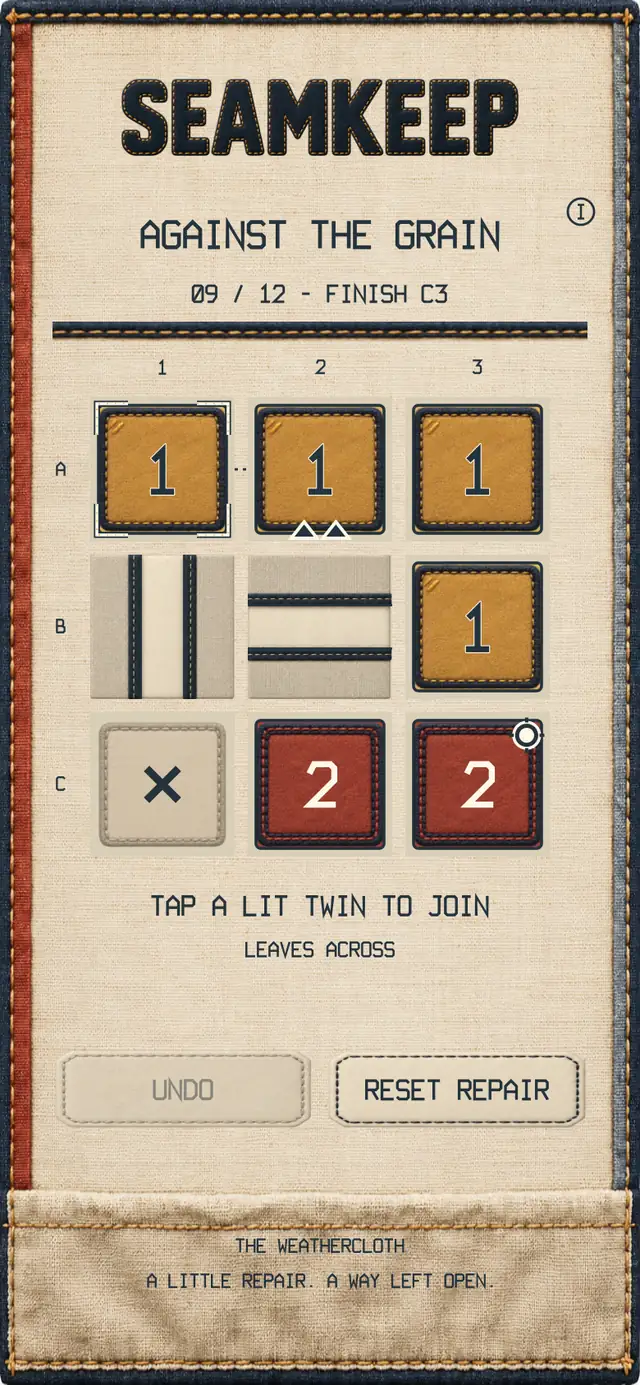
For an untimed example you can try in your browser, see how SEAMKEEP works. For the difference between saved records and a resumable run, read our browser-save guide.
Sources
Related reading
How to choose one-handed mobile games for short breaks
A player’s checklist for games you can reach, learn and put down when your break ends.
Published · Updated · 3 min read

Offline mini games: what to check before you travel
A practical no-connection test, plus the distinction between creating new games online and playing prepared games offline.
Published · Updated · 4 min read
Campaigns and endless mode: designing progression with a finish line
How authored campaigns, optional endless play and planned Claude-assisted challenges could fit together in Poppivo’s community-created games feed.
Published · Updated · 4 min read